

Table of contents
- Page
- 1 From the editor
-
2
Book review:
Passionate Mothers, Powerful Sons - 3 Give and get shelf 101
- 4 Ontario's electricity future
- 5 Laundry choices
- 6 Mud Lake celebrities: Pied-billed Grebe
- 7 Kudos: Helen Mason
- 7 Spotlight: Matt Cordell Hughes
- 8 Wellness Corner
- 11 Getting started on BuildingLink
- 12 Ottawa: A growing hub for movies
- 14 Ode to the Board (and Management)
- 14 Andrew Haydon Park
- 14 Join us on Facebook!
- 15 Parkdale Food Centre
- 16 C'est Bon cooking school
Managing Editor : Irenka Farmilo
Editor : Grace Hyam
Layout : Norma & John Elliott
Photographer : Rick Sellick
From the editor
Irenka Farmilo
There are a lot of new elements in this season's magazine, starting with the masthead. Our old one, tried, true and trusted, was not available to us in a format we could manipulate, despite our best efforts to contact previous Rambler editors. Instead we used open software to create a new logo cost-free and added Norma Elliott's website building skills (aided greatly by live-in software engineer) to create a new layout method. Her web layout can produce a web document in a single or multiple columns, which you control. We’re now firmly in the digital age. (Resistance is futile, as the Borg would say!)
So now you can read the Rambler as a hard black and white paper copy in two columns, as a digital colour pdf in two columns, or as a web document. That’s our response to feedback from those who liked the magazine look of the two-column format but found it irritating to read two columns on a screen. With the web version you can also enlarge the typeface to suit your needs, simply by zooming in. Both electronic versions have a hyperlinked table of contents so you can click and connect with the article you want to read.
Also new is an extended interpretation of our "neighbourhood." This issue ventures slightly beyond our usual scope to spotlight Andrew Haydon Park and a downtown cooking school offering one-off classes in gourmet and ethnic cuisine. After all, our community doesn’t exist in a vacuum.
Finally, don’t miss the debut of our "Did You Know" section, where we share interesting tidbits of our local or wider community. This time we learned serendipitously that Ottawa has a major filmmaking scene that was news to us. If you come across something that sparks an “I didn't know that" response, please share it with us at the email just below the Table of Contents above or through the drop slot in the condo office, addressed to the Rambler.
As we settle into winter, we hope this issue provides warmth, inspiration, and maybe even a new discovery or two. And for those who aren’t fans of the season — don’t worry; we’re already thinking of the spring edition!
Happy Holidays! Happy New Year!
Book Review
Passionate Mothers, Powerful Sons:
The Lives of Jennie Jerome Churchill
and Sara Delano Roosevelt, by Charlotte Gray
Reviewed by Grace Hyam
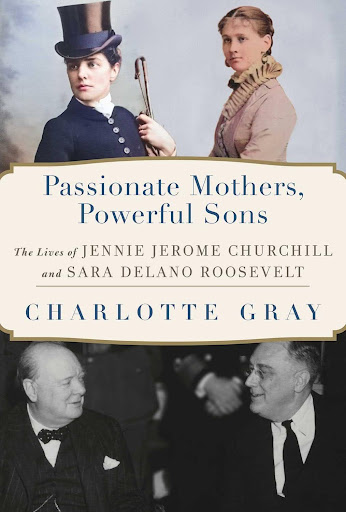
Winston Churchill and Franklin D. Roosevelt were two of the dominant world figures of the 20th century. Their mothers, Jennie Churchill and Sara Roosevelt, each exerted a major influence in the life of her famous son. In this carefully researched book, Ottawa author Charlotte Gray vividly describes these two women, their families, and the society in which they lived.
The two women were polar opposites in personality — Jennie a flamboyant extrovert, Sara a quiet introvert — but their lives had some surprising similarities. They were both born in New York state in 1854, Jennie in January and Sara in September. Their affluent families moved in the same circles, although there is no evidence that Jennie and Sara ever met.
While Jennie was in her teens, her parents took her and her two sisters to Europe. They lived for a time in England, where Jennie met and married Lord Randolph Churchill, a son of the Duke of Marlborough.
Although the Churchills were an aristocratic family, Randolph, as the second son, did not have a large income. Jennie had expensive tastes but not the financial resources to support these. For her and later for her son Winston, money was a lifelong concern. Conversely, Sara's family, the Delanos, were very rich. Sara married James Roosevelt, a widower some years older than herself. Although not as wealthy as the Delanos, the Roosevelts were comfortable financially and Sara and her family never had to worry about money.
Jennie and Randolph had two sons, Winston and Jack. Jennie loved them both but was especially close to Winston. James Roosevelt had a son by his first marriage, and he and Sara together had one child, Franklin. Sara was absolutely devoted to him. Sara considered political life unsavoury, but when her son chose this career path, she supported him unreservedly.
Jennie was outgoing and very interested in politics. Her husband Randolph was a prominent politician and had served briefly as Chancellor of the Exchequer in the British government. Jennie supported him in his career and later when Winston entered politics, Jennie campaigned for him. She was popular in British society and used her social connections as much as she could to promote Winston's career.
Both Jennie and Sara were widowed quite young. Jennie remarried twice, both times to younger men. Sara remained a widow for the rest of her life.
Jennie died prematurely, in 1921, from complications of a badly broken ankle which led to the amputation of the affected leg. She did not live to see her son become prime minister.
Although this book is focused mainly on Jennie and Sara, readers also catch glimpses of the lives of other family members. For example, when Franklin and Eleanor Roosevelt were married in 1905, Eleanor's uncle Theodore escorted her down the aisle. Theodore Roosevelt was president of the United States at the time, and many of the guests were more interested in the president than in the bride. So, even on her wedding day, Eleanor was somewhat overshadowed.
Sara became a loving and generous grandmother to Franklin and Eleanor's children, who remembered her with much affection. After Franklin contracted polio in 1921, Sara wanted him to retire from public life, but he had no intention of doing this. Eleanor approved of his ambition and aided him in his determination to continue a political career in spite of his disability. Once Sara had accepted this decision, she gave Franklin and his family her full support, including significant financial assistance. Elegant and dignified, Sara proudly attended the inauguration in 1933 when Franklin was sworn in as president. Later, when the British king and queen, George VI and Elizabeth, visited the United States, Sara was honoured to receive them in her home. By the time of her death in 1941, she was often referred to as America's matriarch.
This book is a fascinating biography of two amazing women.
Give and Get Shelf 101
Helen Mason
Our Give and Get Shelf is a nice-to-have building feature where you can put items you don’t need and others can help themselves to something they would enjoy having. It can work for everyone and save landfill in the process. But...we’re restricted in what can go on the shelf.
- Dishes and cutlery — not rusted, not contorted, not broken
- Small appliances and appliance — in safe working condition
- Knickknacks — clean and in good shape
- Books — in decent condition but wrong format or too old for our library
- Magazines — reasonably current (unless you’re offering for true antique value)
- Toys or games — intact, all pieces present, and clean (especially toys)
- Egg cartons (cartons please; not flat cardboard without a lid) and pill bottles — put in the bins provided for EarthHub to collect.
- Clothes
- Furniture
- Food
- Medications
- Anything so past its prime that it’s essentially garbage.
- No X-rated material — that includes written words, still photos, or videos, in any format.
If we don’t use the shelf as intended, we risk losing it because of complaints and added work for staff. Let’s not waste a sharing opportunity, an ecologically sound way to shed items for the donor, and a free source of needed items for the recipient. The shelf is one small step to a diminished footprint. Let’s make it work!
Is Ontario’s electricity future sound?
Diana Ralph
Several dozen NW One residents attended the Sept. 23 meeting of the NW One Environment Action Group to hear Angela Bischoff, chair of the Ontario Clean Air Alliance, challenge the Ontario government to make provincial electricity 100 percent renewable. Formed in 1997, the Alliance spearheaded the successful fight to shut down polluting coal plants in Ontario in 2003. Angela explained that Ontario plans to slash Ontario’s contracts with Quebec’s cheap, sustainable hydroelectric power, and instead invest $177 billion in new and rebuilt nuclear reactors and increase “natural” gas plants by up to 580 percent by 2030.
What’s wrong with that? Lots, Angela argued. Nuclear power costs almost five times more than hydroelectric power, and two to three times more than solar or wind energy. Citing M.V. Ramana, a University of British Columbia professor’s new book, Nuclear is Not the Solution, she presented evidence that nuclear energy is highly polluting, generating mountains of radioactive waste that contaminate our groundwater. “There’s no safe way to store the waste for the million years it will remain radioactive. It’s prone to catastrophic accidents and produces plutonium, which can be used in nuclear weapons. Because of these issues, global investments in nuclear power have fallen dramatically.” Similarly, she pointed out, natural gas (methane) is almost as expensive as nuclear power and it causes 80 times more global warming than carbon dioxide.
Ontario electricity appears cheap, Angela said, because oil and nuclear companies get $7.3 billion of our tax dollars in subsidies each year. If these polluting sources of energy weren’t subsidized, they couldn’t compete with solar and wind energy. Angela argued that only the big power companies, like Enbridge, Ontario Power Generation, Bruce Power, and Cameco, benefit from these investments.
Angela extrapolated from research in other jurisdictions to show that if Ontario tripled its investment in solar and wind power and renewed its commitment to clean hydroelectric power, it could be completely sustainable by 2030. She noted that, “globally solar installations have grown over 1,000-fold in 20 years and now exceed global nuclear power generation. And Quebec has ample surplus hydroelectric power, which produces no greenhouse gases, to sell cheaply to Ontario in the summer to power air conditioners.”
Aside from saving millions in tax dollars and reducing dangerous pollution, Angela suggested there’s an even bigger reason why we should care about where our electricity comes from. “Investing in renewable energy sources is increasingly urgent,” she said. This has been the hottest year ever recorded in North America.
A 2020 joint study by the National Capital Commission (NCC) and the City of Ottawa predicts that between now and 2080, the NCC region will get dangerously hotter and wetter, with far more extreme weather, This will cause wildfires; extended power outages; flooding; damage to roofs, foundations, and roads; extended heat waves; and high energy demands, especially for air conditioning. The hot, humid weather will attract more pests and invasive species, which will harm agriculture production and bring more Lyme disease and West Nile virus. Food prices and insurance will rise and, with heat waves in the summer and without as much winter snow and ice, the overall economy will suffer.
The joint study predicts that the city and others responsible for managing emergencies, including condos, will have trouble responding to simultaneous and repeated extreme weather events. Essential services will be reduced, putting vulnerable people even more at risk.
For anyone interested in more information on how the Ontario government could triple its investment in renewable energy, Angela offered this link to the Ontario Clean Air Alliance website: www.cleanairalliance.org
Laundry choices
Norma Elliott
An overheard remark that unscented laundry products are more expensive led me to do some research into the price of keeping our clothes clean.
It quickly became apparent that most major brands price their scented and scent-free detergents the same. This is good news. If your favourite brand is priced higher for unscented, speak to the store manager. Politely explain that in other stores scented and unscented detergents of the same brand and size have the same price. (See table.)
To wean yourself off scented detergents, tuck little sachets or soap in bureau drawers and closets, or anywhere you store textiles. These will leave a pleasant scent but nowhere near as strong as the chemical perfume added to laundry detergents. Plus it doesn't waft through the building with the dryer exhaust.

The artificial fragrances in laundry products could mean any combination of around 3,000 chemical ingredients, some of which are hazardous, like acetaldehyde, limonene, chloromethane, and acetone. Sadly manufacturers of laundry products are not required to list detailed ingredients on the container.
If you are concerned with static cling, the best substitutes for dryer sheets are laundry balls, wool or plastic. Just keep them away from your cat who will think they are toys.
Let's be kind to our neighbours who are sensitive or suffer from serious reactions to fragrances.
Mud Lake celebrities: Pied-billed Grebe
Helen Mason
When you stood on the dock overlooking Mud Lake this summer, did you hear a peep-peep-peep coming from way out in the water? Did you search but couldn’t find what was making it? You weren't alone. During the summer, a pair of Pied-billed Grebes raised a family in the middle of the lake. People who recognize the baby's call for food (look for the last call here: www.allaboutbirds.org/guide/Pied-billed_Grebe) knew there were babies out there. But Pied-billed Grebes are so small they're hard to see at a distance without a pair of binoculars. When I first saw one in the fall of 2022, I thought that a baby duck had been abandoned by its parents and wouldn't be able to migrate. Fortunately, a local birder put me right. I'd photographed a young adult.
This year, the young came closer to shore as fall approached. I finally photographed one under the bridge on a Friday when hardly anyone else was around the lake. These birds are shy.

Pied-billed Grebes are small and chunky diving ducks that grow 30 to 38 centimeters long, quite a bit smaller than the Wood Ducks and Mallards we're used to. They have a short, blocky head, a short, thick bill, and almost no tail. The ones in Rick Sellick's pictures here are young. If they were older and in breeding season, they would have a vertical black stripe on their bill.
Around Mud Lake, Pied-billed Grebes are the duck you see one second—and then it's gone, diving underwater and coming up who knows where? Sometimes you can follow it. At other times it disappears into the floating vegetation.
Look for Pied-billed Grebes until the water freezes. In early November one was close to the shore by the Cassells entrance. Unlike Canada Geese, Pied-billed Grebes aren't very good flyers. You won't see them gather in large flocks and, apparently, they make their journey at night, so you won't see them leave.
Kudos!
To Helen Mason for her novella Maybe Yes, Maybe No
The novella appeared in the October 2024 issue of WordCity Literary Journal. Using a first-person narrative, Helen shows what it might be like to have bipolar disorder type 1. Her settings will be familiar to Northwest One readers.
Read the entire story here: wordcitylit.ca/2024/10/11/maybe-yes-maybe-no-a-novella-by-helen-mason/
Spotlight: Matt Cordell Hughes:
Activist, musician, teacher
Rick Sellick
On a sunny Thanksgiving weekend, I sat down with Matt Hughes in his 21st-floor Regina apartment. I knew I was in for an interesting conversation with Matt when he introduced me to his five-year-old cat who was sitting close to the door. This is Zamboni Macaroni, Matt said, and he knows and responds to his name. Mr. Macaroni took no time at all to come over to make friends.
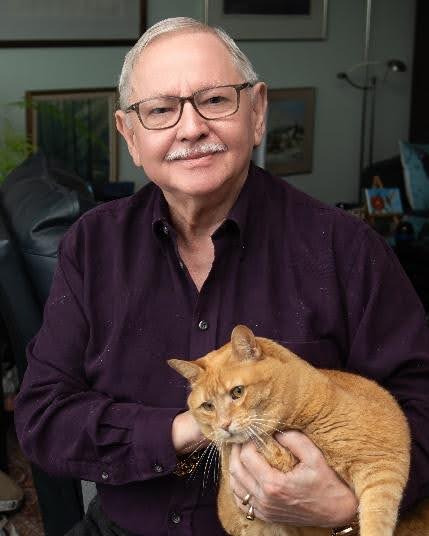
Matt was born on July 17, 1941, and lived for a time in San Antonio, Texas where a sister lives to this day. His love of music grew from an early age when he asked for and received piano lessons. He is a citizen of both the U.S. and Canada (1987), and he describes himself as an army brat who moved many times over his young years. Early on, his father moved the family to Japan as part of the U.S. occupation army after World War II. He has also travelled to England, France, and Germany. But by far his favourite country is Greece, and Santorini is a place he highly recommends everyone should see at least once in their lives.
Matt has lived in Regina with his husband Roger Johnson since 2019. They have known one another for the past 44 years and were legally married in 2003. They moved to Ottawa after a stint in Toronto where Matt was a condo president for a time. But they found Toronto too large and too expensive a place to live and, like Goldilocks, Matt finds Ottawa to be just right.
Matt’s biography, which he thoughtfully provided to me, describes him as a pioneering activist whose 1984 challenge against Acadia University secured the first same-sex spousal benefits from a Canadian school. He was also instrumental in starting a gay social organization for students at Acadia University.
Matt is active politically and is proud that he and Roger helped to get Alexa McDonough elected leader of the NDP party in 1995. He is currently reading a book on Brian Mulroney (On the Take: Crime, Corruption and Greed in the Mulroney Years, by Stevie Cameron) in which she adds to the debate about Mulroney’s time in office and corruption relating to the Airbus purchases.
Matt’s academic and working career revolved around studying and then teaching music. He taught a wide variety of music classes at Acadia University from 1969-1996. Previous to that he spent nine years at the University of Texas (Austin) and it's clear this is where he gets his southern drawl from, and he smiles when he says he’s fluent in Texan. Over the years he taught piano and fortepiano (an historic precursor of the modern piano), along with music history, including two popular classes, “Out of the Closet” and “Queer Composers 101.” During his academic career he was published multiple times with the University of Texas, Yale, Columbia, Dalhousie, and the University of Toronto presses. As a master fortepianist Matt has performed in Canada, the U.S. and Europe and recorded for CBC and ATV television. In 2009 Matt donated his beloved fortepiano to the Canadian Opera Company, where it’s used in earlier operas written by Baroque composers as well as Mozart, Donizetti, Rossini, and Bellini.
As we were finishing up, I asked Matt about living in Regina. He enjoys swimming and participating as part of the 4 O’Clock Connection steering committee. He marvels at his view from the 21st floor with the city spread out below. As this interview took place over Thanksgiving, he is thankful that we live among such friendly and welcoming people in Regina and that people are always eager to converse in the elevator. We can be thankful to have so many interesting people like Matt Hughes at NWOne.

Wellness Corner
Upcoming events
Ann Bolster
It's an unfortunate fact of life that, as we age, we start to wear out. We can ignore the signs, we can complain, we can try to slow the processes, or we can accept and adjust our thinking — which sometimes means finally wearing a device or undergoing a procedure.
The NWOne Wellness Committee will be inviting speakers to our building to educate us on the many aspects of health and well-being, and clinic opportunities to address potentially serious problems. Early 2025 is a good example of our results.
Hearing Loss and Its Impacts
On January 23, from 7 to 8pm in the party room, audiologist Melanie Baur, MA, AuD, of the Care Clinic at
Perley Health, will talk about the mechanisms of hearing, what can cause its loss, and what impact this loss can
have on many aspects of life, including aging and cognition. This talk will be of interest to all ages.
Screening for Valvular Heart Disease
On February 25 the Heart Institute mobile clinic will come to NWOne to screen for this common and often
undetected disease. The progression of this condition can result in debilitation and a drastically shortened
life and yet can often be halted with treatment at an early stage. This free clinic, which will run between 8:30
and 3:30pm, offers early detection, diagnosis, and a treatment recommendation by a cardiologist at your
appointment. Preregistration is necessary, and you must meet certain criteria: age 65+, no previous or current
heart condition, no history of stroke, and no pacemaker.
For further information on these events and/or to sign up to be notified about future wellness events and news, email nw1wellnesscommittee@gmail.com or call 613-722-5525.
Public wellness clinics
Ann Bolster
Older adults in our neighbourhood now have a place to go for a wellness check if they do not have a family doctor or would have a long wait for an appointment. Instead of going to an emergency department or toughing it out, hoping the problem will go away, they can just go to the public library!
The Ottawa Paramedic Service, which until recently was an important part of the Ambleside condo wellness clinics, has arranged to hold clinics at the Carlingwood branch of the Ottawa Public Library. The aim is to expand access to this type of health service to all older adults in our community. Staff from Pinecrest Queensway Community Health Centre are part of the project.
Following a successful trial clinic in November, future clinics will be held from 1:30 to 4:30pm on the third Wednesday of each month. The clinic provides individual assessment and information through interview and testing (of blood pressure, heart rate, blood sugar level and oxygen saturation). Recommendations may follow, including referral if necessary. Staff will pay particular attention to chronic concerns such as respiratory health, heart disease and diabetes, and will also provide information on navigating the healthcare system.
For those new to this area of Ottawa, the Carlingwood library is at 281 Woodroffe Avenue, a very short walk from Carlingwood Shopping Centre. The no. 51 bus, which has a stop across from the Poulin main entrance, will drop you off at the library. Bus and LRT services are free to seniors on Wednesdays.
You will need to book an appointment through the Ottawa Paramedic Service’s online platform: ottawacp.inputhealth.com/ebooking. For help with registration, you are invited to call the Community Paramedic Office, at 613-580-2651.

A peek into pharmacy services
Rambler team
(with thanks to Rick Sellick for taking good notes)

On Sept 25 Ruth Becker, BScPharm, gave NWOne residents a talk on the current services her pharmacy offers at Rexall Pharma Plus, 2529 Carling Ave, where she is both pharmacist and manager. As most Ontarians know, pharmacists are now permitted to treat certain illnesses and conditions that were once restricted to physicians, although not every pharmacy delivers the same suite of services as Ruth does at her location. Some of what pharmacists can now do have become familiar, but other services may come as a surprise.
Listing the ailments a pharmacist can treat could potentially be a dry subject, but not when Ruth is at the podium. Passionate, progressive, engaging, Ruth entertained her audience with a presentation chock full of good information on a wide range of services. Describing herself as a tree hugger, Ruth uses traditional and holistic approaches to client care. Naturally, she said the most frequently asked question of pharmacists is how many ailments they’re permitted to treat. The answer is 19 in all, including skin conditions, insect bites, sprains and strains, certain internal ailments or reactions, and others, shown in detail on the Ontario College of Pharmacists website. Treatment includes issuing prescriptions, albeit with certain limitations.
Less known is that a pharmacist can offer a few other, perhaps unexpected, services. For instance, they can provide a small number of bridge pills while you're waiting for your doctor to refill your prescription. Rexall has introduced a virtual branch of pharmacy services, meaning pharmacists can call patients in the comfort of their homes to discuss their medications. Pharmacists also play an increasing role in patient education. Witness Ruth’s Sept. 25 appearance.
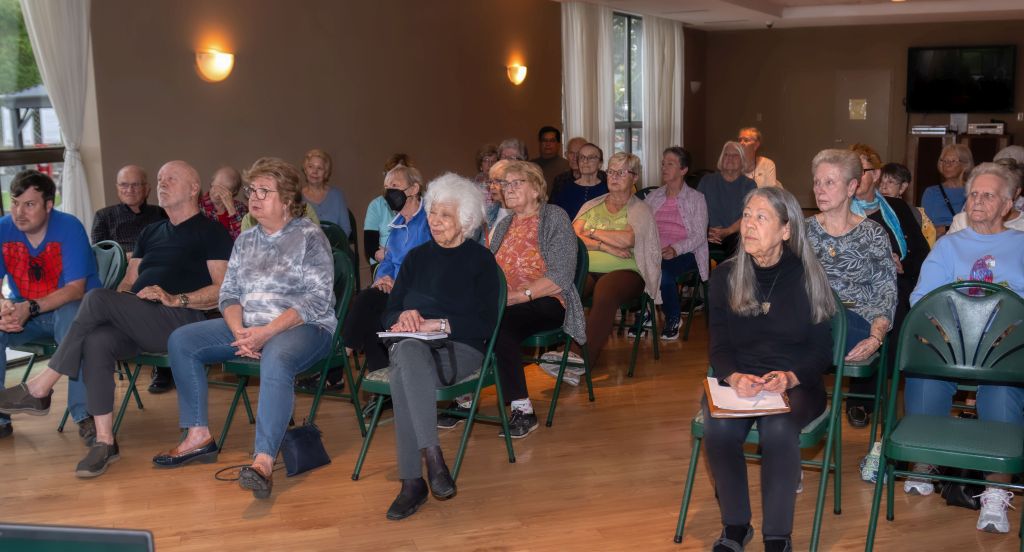
If you’re beginning to wish you’d been able to hear Ruth talk, there is second best available. The entire presentation, along with an AI-generated transcript of Ruth’s comments, is located on the Northwest One Condominium Facebook page You can download the PDF document that is located under the Guides tab (located at the top of the page under the label “Invite.”) We’re also looking into ways of using BuildingLink to store such information.
Ruth’s Peek Into Pharmacy Services focused also on the need for open and trusting communication between you and your pharmacist. She said pharmacists are there to help you and be part of your medical support team, working hand in hand with your doctor to provide for your care.
Diabetes Awareness Day
Grace Hyam
On November 7, the Ottawa West and Nepean Lions Club Branch presented a Diabetes Awareness Day. The location was St. Paul's Presbyterian Church on Woodroffe Avenue. Helen Mason, who lives in the Regina building and is President of the Kanata-Hazeldean Lions Club, was the chief organizer of this event, and I was one of many NWOne residents who attended.
The first presenter was a woman whose family has been deeply affected by diabetes; she described their experiences with the disease. Next, a woman from the Ottawa Memory Clinic talked about Alzheimer's disease and its connection with diabetes. A talk by two University of Ottawa researchers on heat stress and diabetes completed the morning sessions.
During the noon break, we were offered a complimentary lunch, which was a real treat! Tandoori chicken, salad, gluten-free sweet potato crackers with hummus, and fresh fruit for dessert.
The presentations continued with a nurse talking about foot care and how diabetes adversely affects circulation and the lower limbs and feet. Next was a talk on diabetes and hearing. Then a financial analyst explained the basics of the Registered Disability Savings Plan and the Disability Tax Credit. The next presentation introduced us to the FreeStyle Libre 2 continuous glucose-monitoring device, in which an insertable filament detects sugar in the interstitial fluid in a person's upper arm and can even transmit the information to an app on their cell phone. Lastly, a man from the Lions Foundation of Canada Dog Guides talked about diabetes alert dogs — service dogs trained to detect sudden drops in their handler's blood sugar levels. These dogs are very helpful for people who lack hypoglycemic awareness. In future sessions, there may also be a segment on nutrition for diabetics.
Altogether it was a most interesting day and I learned a lot. Kudos to Helen Mason for organizing it!
The Lions are planning further Diabetes Awareness Days in the New Year. If you haven’t been to one of these days, stay tuned for information about places and dates. The sessions are free and open to people with or without diabetes or prediabetes.
BuildingLink: Getting started
Norma Elliott
Building Link is the online tool or app available to residents to communicate with the office, with building staff, and with one another.
When you arrive at Northwest One, the office sends you an email containing credentials for logging into BuildingLink. If you have accidentally deleted that email, you will have to ask the office for a replacement.
If you have your credentials but haven't accessed your account yet, let's do it now. In your browser, go to Building Link

You are greeted by a photo of the Regina building with a login block in the bottom right corner. Enter your Username and Password as assigned by the office. You should change the password once you are inside your account.
You will notice your name and unit # displayed at the top right of the screen.
Underneath your name are:

Before doing anything else, click on Help for details on the following topics:
- Screen Sharing Support: Not currently available
- FAQ and Troubleshooting: Help with possible BuildingLink problems
- When to Contact Building Staff or BuildingLink: Suggestions on whom to contact and when
- BuildingLink Resident App: How to get the BuildingLink app for your phone or tablet
- Editing BuildingLink Profile: Inform the office of things about you that will make it easier to help you when you need help.
- Change User Name & Password: Change your password after logging in for the Password first time. The office provided a generic password. Make a password that is is unique to you. Follow the instructions here.
After you have logged in and had a quick look around at what's available, you can click on Logout in the upper right. Alternatively, you can leave BuildingLink open to make it easier to access.
We’ll give more information on BuildingLink in the spring Rambler.
Did you know? Ottawa is a growing hub for movies
Irenka Farmilo
Ottawa may not be the first city that comes to mind when people think of filmmaking, but Canada's capital is steadily building a name for itself in the industry. Last year over 20 films were in varying stages of production in Ottawa — a fact that surprises many residents and visitors alike. While it may lack the bustling film studios of Toronto or Vancouver, Ottawa offers unique settings, generous provincial tax incentives, and a close-knit community that make it an appealing choice for filmmakers.
One of the reasons Ottawa has become an attractive filming location is its picturesque backdrop. With its blend of historical architecture, urban neighbourhoods, and natural landscapes, the city can mimic various settings, from urban centres to small towns. The Rideau Canal, Parliament Hill, and Gatineau Park offer iconic scenery that has appeared in several productions. Whether a story is set in a bustling cityscape or a tranquil, natural environment, Ottawa’s diverse locations make it easy for filmmakers to get creative with their settings.
The growth of the Ottawa film scene benefits local businesses, professionals, and filmmaking programs at Algonquin College and Carleton University. Film shoots bring in jobs for actors, technicians, and crew members, as well as business for hotels, restaurants, and other local services. In addition, film festivals such as the Ottawa International Animation Festival, the Canadian Film Institute’s screenings, and the ByTowne Cinema independent film festivals provide opportunities for the community to engage in the art of filmmaking. In November through the Canadian Film Institute, Ottawa hosted the 39th annual European Union Film Festival at the Ottawa Art Gallery — a festival that lasted two weeks with multiple daily showings.
Given Ottawa’s expanding population, it’s not surprising filmmaking is on the rise and the industry is growing. Ottawa’s film scene is independent, not as competitive as some other places. It has a branch of the global Kino movement, Kino Ottawa, which brings together filmmakers and creatives to make short films in an often spontaneous environment. They host events, like Kino Kabarets, where filmmakers, writers, actors, and crew members come together for a short period (usually a weekend or a few days) to produce films from start to finish in an environment of mutual support, collaboration and learning.
Despite its impressive, growing output, Ottawa’s film scene remains largely unknown to the general public. Many residents aren’t aware of the dozens of productions taking place each year, nor of the city’s evolving role as a filming location. They probably don’t know of the not-for-profit Ottawa Film Office (OFO — created by the City of Ottawa), which among other things is currently working with partners in the hopes of building a $40-million sound stage. Inevitably, word will spread, and Ottawa may then get the recognition it deserves as a major player in Canadian filmmaking.
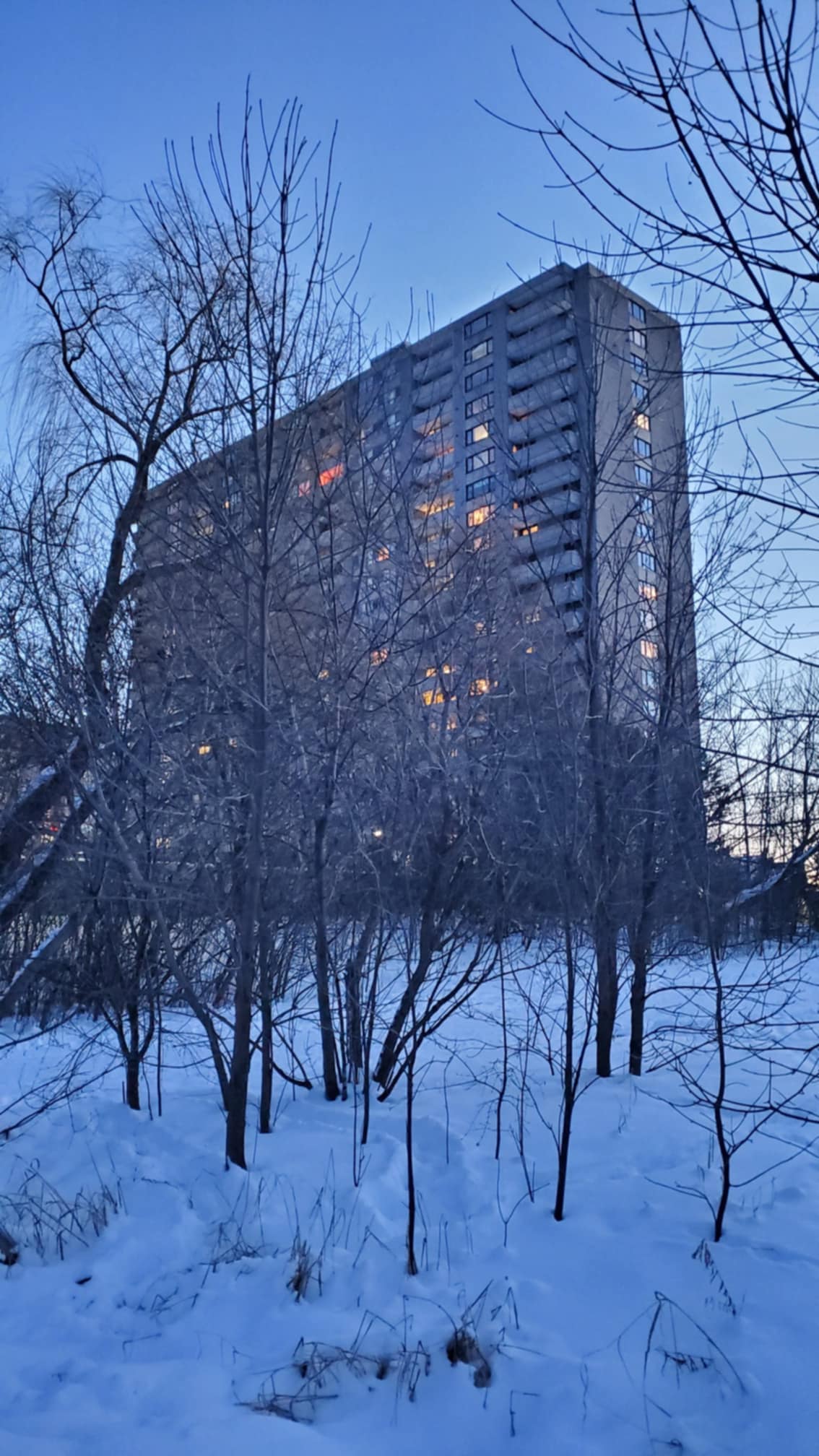
Photo: Irenka Farmilo

Photo: Irenka Farmilo
Ode to the Board
(& Management)
Irenka Farmilo
At last, sweet silence fills the autumn air,
Where drills once sang, and hammers dared to pound.
Our balconies reborn, now strong and fair,
Stand safe and sound in space above the ground.
For months, we braved the dust, the dirt, the din,
Our views obscured, our patio doors shut tight.
Yet still, we knew within why work was done,
To keep our home both beautiful and right.
O condo board, with foresight firm and true,
Who faced the challenge, no one would contest,
We honour you for seeing this task through,
To mend the concrete that the years had stressed.
And to the office staff, we send our praise,
Who bore the calls and juggled each complaint.
Through trials long, you served in steadfast ways,
With patience, grace, and calmness — never faint.
Let quiet reign now o’er Regina’s walls,
Our towers strong, their future bright and sound.
For while the noise of progress fades and falls,
Our gratitude endures in peace profound.

- Andrew Haydon Park
- Norma Elliott

Andrew Haydon Park
Photo: N. Elliott
If you have visited Andrew Haydon Park lately, you may have noticed that the water level in the pond is more than a few inches lower than it used to be. You may also have noticed that reeds around the pond are proliferating. The bandshell is practically hidden these days.
The creek that used to feed the pond has dried up. Grass growing in the creek bed has obviously been mowed recently, indicating perhaps an acceptance of the creek's absence.
I wrote to our favourite city councillor — Theresa Kavanagh — to ask if she would find out what was happening. Within a day I had a response telling me that the pump that fed the creek had broken down, that it was buried deep in the ground, and is presenting a challenge to repair. The city is currently searching for a contractor to diagnose and hopefully solve the problem. We now may well have to wait until spring 2025 for them to have an answer, never mind a repaired or replacement pump.
So the bad news is Andrew Haydon Park is looking the worse for wear. The good news is the city is on top of the problem, or so they would have us believe. They had also issued a work order to remove a dead goose. I remain hopeful.
Join us on Facebook
Alicia Cuzner
(Northwest One Social Committee)
Looking to stay connected with the latest updates, events, and opportunities at Northwest One? Join the Northwest One Condominium Facebook group! It’s the perfect way to stay informed about community news, building events, and resources for residents — all in one place! There are Guides and Files tabs in the group that include BuildingLink help guides for new residents navigating the NWOne e-communication systems.
Alicia Cuzner (Facebook name Alicia Hanna) is the admin and uploads the minutes and resources that are recorded from presentations hosted by various committees in the building. In the near future, the BuildingLink Library will have all the same resources on it, but the Facebook group is updated faster since minutes are uploaded directly after the events. If you’re unfamiliar with BuildingLink, have a look at the article earlier in this issue explaining how to use it.
Whether you’re interested in upcoming gatherings, need information on building services, love sharing pictures of our beautiful Mud Lake, our other areas, and our buildings, or want to connect with your neighbours, Northwest One Condominium Facebook group keeps you engaged!
To join the group, go to your Facebook newsfeed page, enter “Northwest One Condominium” in the search bar, and click “request to join group.” Alicia will approve your request after you answer the prompted questions to correctly identify yourself as a resident or family member. If you make a mistake, Alicia will reach out to you to verify. Only Northwest One residents and close family members can join the group. There’s no private building information shared in the group, but Alicia closely monitors the requests to join so that the group is only our condo neighbours.
Hope to chat with you online! ❤️
Parkdale Food Centre
Tassy Kingsley
Did you know that one in eight Ottawa households struggle to put food on the table? That’s over 50,000 households, or around 120,000 people without enough food to eat. There are a number of food support centres in our general area of the city, including the Parkdale Food Centre (PFC), which helps over 1,500 people a month. Clearly, the need to address food security is great.
NWOne residents have risen to the challenge, collecting food once a week from the lobby area and taking it to the PFC. If you’re looking for a worthy cause in need of your donations, here’s a list of what’s most appreciated:
- Canned fish (tuna, salmon, sardines)
- Canned or dried legumes (chickpeas, kidney beans, black beans, lentils)
- Canned tomato and pasta sauces
- Peanut butter
- Pasta
- Healthful cereal
- Oats, flour, barley, rice
- Gluten-free grains
- Toothbrushes and paste, soap, shampoo
- Feminine hygiene products
- Diapers
- Dog and cat food
Simply drop your items in the green bin in the mailroom. Once a week, volunteers gather and deliver items to the PFC. We need unopened items within their best-before date. Please don’t leave expired or opened containers in the green bin. If you have any questions or would like to volunteer in some way, contact Tassy Kingsley at tkayak@rogers.com
Did you know? C'est Bon cooking school
Irenka Farmilo & Amar Marouf (relative of Regina residents)
A hidden local gem is Ottawa's C'est Bon cooking school, which not many people seem to have heard of, although it's been around since 2009. Located in the Byward Market, the school offers gourmet cooking classes for individuals or groups as one-off or multiple sessions. Classes teach French techniques — rather than recipes — and cover other ethnic cuisines. Learning is hands-on and all tools and ingredients are included in fees. You get to eat or take home the dish you make.
Those are the raw facts. Here's an enthusiastic first-hand account by Amar Marouf describing the experience of taking C'est Bon's classes:
Stepping into the kitchen at C'est Bon cooking school was stepping into a world that felt like a well equipped home, yet sparked a sense of excitement for what I was about to master. I've learned the meticulous dance of crafting macarons, the delicate art of rolling sushi, the patient rhythm of baking cakes, and the precision required for French techniques — stocks and sauces that transform dishes with a single flick of the wrist. But beyond the technicalities of learning cooking techniques, there was something unexpectedly different. There was a rawness to the classes, a warmth that brought cooking down to its essence — simple, joyful, and alive. I wasn't just following directions; I was engaging with ingredients as if they had stories to tell, and each whisk, chop, and simmer coaxed those stories out. I felt my hands move with the muscle memory of past skills, yet there was a thrill in experimenting with, in playing with, unfamiliar flavours, and learning to trust my instincts for the finer details. The class camaraderie in the kitchen is genuine — everyone's eyes light up as we share our small victories — the way a sauce thickened just right, or a crust developed to a perfect golden hue. Each dish was not just a finished product but a lesson, a collection of moments spent not only absorbing knowledge but also celebrating the alchemy of turning simple ingredients into something more. By the end of every class, it was never just about what I'd learned; it was about what I'd felt — the joy of creation, the thrill of trying something new, and the reminder that cooking is as much about intuition as it is about technique.
https://cestbonottawa.ca/
200 Dalhousie St., Ottawa
Credit and our sincere thanks to:
Tiziri Marouf: Logo design. John Elliott: Technical guidance and assistance.
Rick Sellick: Photography unless otherwise credited.
